
How to Change a Tire
Step-by-step roadside tire replacement guide
 Marcus Chen Updated 2025-11-15 20 min 8 steps
Learn how to safely change a flat tire on any vehicle. This comprehensive guide covers everything from finding a safe location to properly torquing your lug nuts.
20 min
Time Required
Free – $20
Estimated Cost
8
Steps
medium
Safety
What You'll Need
Tools
Materials
Step 1 of 8
Find a Safe Location

Pull over to a flat, stable surface away from traffic. Turn on your hazard lights. If on a highway, try to reach an exit or rest area. Never change a tire on soft ground, a hill, or near fast-moving traffic.
Tip
Keep a reflective safety vest in your trunk for roadside emergencies.
Step 2 of 8
Secure the Vehicle

Put the vehicle in Park (or first gear for manual). Engage the parking brake firmly. Place wheel chocks behind the wheels on the opposite side of the flat tire to prevent rolling.
Warning
NEVER work under a vehicle supported only by a jack. Always use jack stands.
Step 3 of 8
Gather Your Tools
Locate your spare tire, jack, and lug wrench. These are typically stored under the trunk floor or mounted underneath the vehicle. Consult your owner's manual if you're unsure of their location.
Tip
Check your spare tire's pressure periodically. A flat spare is useless.
Step 4 of 8
Loosen the Lug Nuts

Using the lug wrench, turn each lug nut counterclockwise about ¼ to ½ turn. Do NOT fully remove them yet. If they're very tight, use your body weight by standing on the wrench handle.
Pro Tip
Use a cross/star pattern when loosening to prevent the wheel from binding.
Common Mistake
Many people try to remove lug nuts after jacking up the car. Loosen them while the wheel is still on the ground for stability.
Step 5 of 8
Position and Raise the Jack

Place the jack under the vehicle's frame at the designated jack point near the flat tire. Consult your manual for exact placement. Raise the jack until the flat tire is about 6 inches off the ground.
Warning
Incorrect jack placement can damage your vehicle or cause it to slip. Always use the manufacturer's recommended jack points.
Step 6 of 8
Remove the Flat Tire
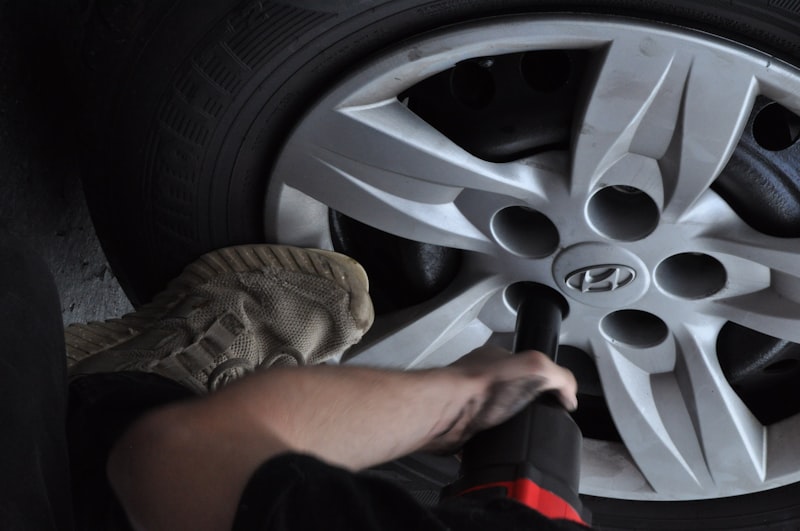
Now fully unscrew the lug nuts and place them somewhere safe (your pocket works). Pull the flat tire straight toward you to remove it from the hub. Lay it flat under the vehicle as an extra safety measure.
Tip
If the wheel is stuck, kick the rubber tire firmly (not the rim) to break it free from the hub.
Step 7 of 8
Mount the Spare Tire

Lift the spare tire onto the hub bolts. Push it in until the bolts poke through the holes in the rim. Hand-tighten the lug nuts in a star pattern until snug.
Tip
Align the valve stem facing outward so you can check and add air easily later.
Step 8 of 8
Lower and Torque
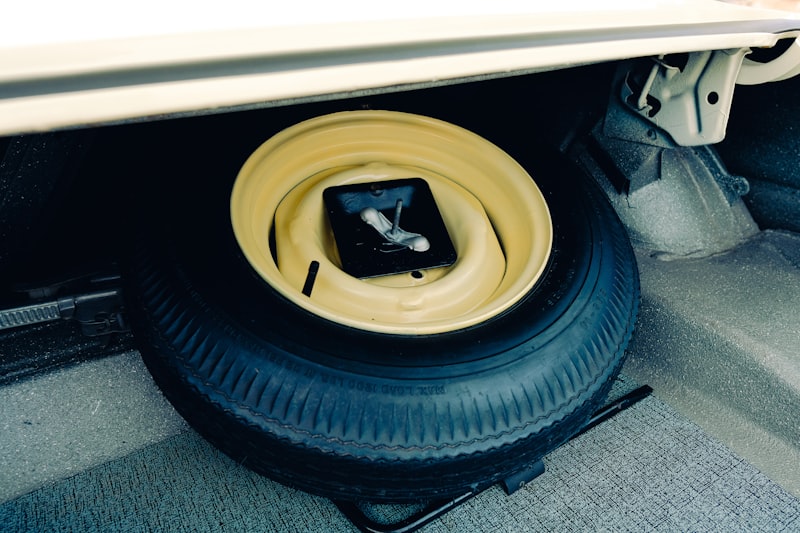
Lower the jack until the tire touches the ground but the full weight isn't on it yet. Use the lug wrench to tighten the lug nuts firmly in a star pattern. Lower the jack completely and remove it. Give each nut a final tighten. Check your spare tire's pressure and drive carefully — compact spares should not exceed 50 mph.
Warning
Compact spare tires are temporary. Get your regular tire repaired or replaced within 50-70 miles.
Interactive Troubleshooter
Does the engine crank (make a repeated turning sound) when you turn the key?